
Earn Your Wilderness EMT (WEMT) in 4.5 Weeks in Western North Carolina
Take your emergency medical skills beyond the ambulance with SOLO Southeast’s intensive Wilderness Emergency Medical Technician (WEMT) program in Western North Carolina. This 4.5-week Wilderness EMT course combines professional EMT training with specialized wilderness medicine education, preparing students to provide emergency care in traditional EMS settings and remote backcountry environments.
Based in the mountains of Western North Carolina, SOLO Southeast provides an ideal setting for hands-on wilderness medicine training. Students develop their skills in an environment where rugged terrain, outdoor recreation, and remote locations create realistic opportunities to learn and practice backcountry patient care.
The first portion of the program focuses on the Emergency Medical Technician (EMT) curriculum, where students develop essential pre-hospital assessment and patient care skills. The final portion takes those skills into the field through a dedicated Wilderness Module focused on remote patient care, prolonged care, rescue, and evacuation.
Students who successfully complete both components earn their SOLO Wilderness EMT certification.
Emergency Medical Technician (EMT)
240 Hours | 26 Days
The EMT portion of the WEMT program is an intensive course covering the Department of Transportation EMT curriculum. Students develop the knowledge and practical skills needed to assess and care for patients in the pre-hospital environment.
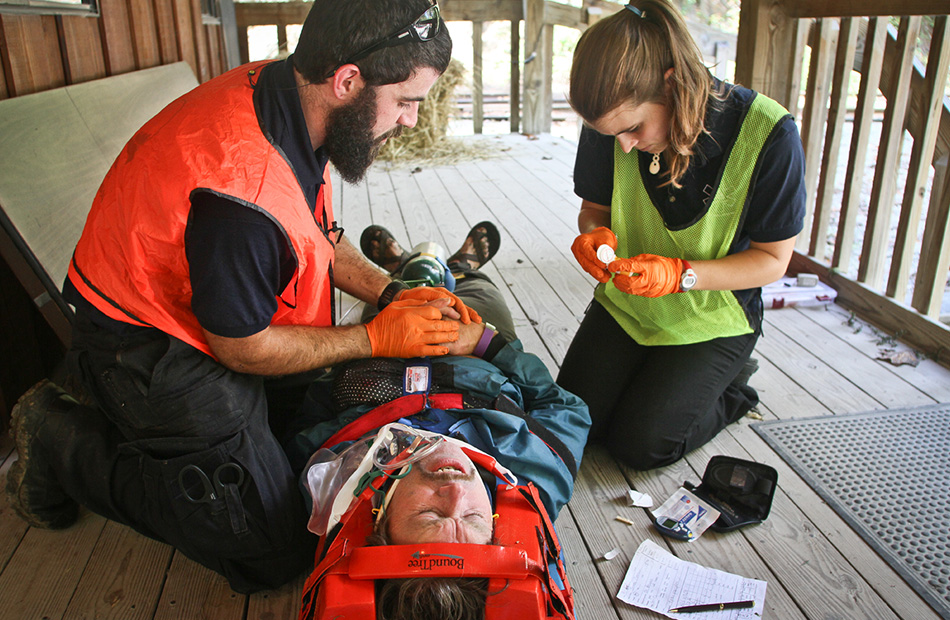
Training includes patient assessment, airway and circulation management, medical and trauma emergencies, emergency interventions, incident management, patient movement, hands-on scenarios, and clinical observations with local EMS agencies and emergency departments.
The course also includes Basic Life Support (BLS) CPR and NAEMT Emergency Vehicle Operator Safety (EVOS) training.
Wilderness Module
40 Hours
The Wilderness Module builds on students’ EMT training and teaches them how to provide effective patient care when an ambulance, hospital, or additional medical resources may be hours away.
Students learn to adapt their medical skills to the remote and rugged environments of Western North Carolina, with an emphasis on patient access, assessment, treatment, prolonged care, and evacuation.
Wilderness medicine and rescue topics include:
- Remote patient assessment and care
- Extended and prolonged patient care
- Patient evacuation
- Search and rescue
- Wilderness survival skills
- Rope rescue
- Improvisation with limited medical resources
- Medical decision-making in remote environments
Wilderness EMT Certification
Students who successfully complete both the EMT course and Wilderness Module earn a three-year SOLO Wilderness EMT (WEMT) certification and a two-year BLS CPR certification.
Completion of the SOLO Southeast WEMT program does not automatically grant North Carolina or National Registry EMT certification. Each student is responsible for completing the applicable requirements and examinations to obtain their North Carolina EMT and/or National Registry EMT (NREMT) certification.
Wilderness EMT Training in Western North Carolina
If you’re searching for Wilderness EMT training in Western North Carolina, SOLO Southeast offers an intensive, hands-on program in the heart of the Southern Appalachian Mountains.
The Western North Carolina location gives students the opportunity to learn wilderness medicine where those skills matter—combining professional EMT education with practical training for remote, backcountry, and outdoor environments.
Lodging: Available through NOC
Meals: Available through NOC’s Restaurants
Recommended For: Those seeking a career in Emergency Medical Services, state or federal agencies, the military or law enforcement, and expedition or wilderness guides.
Upon Successful Completion:
- 3-year Wilderness Emergency Medical Technician certification
- Certificate of completion for 240-hour state and nationally-certified Emergency Medical Technician course (qualification for NREMT/NCEMS written test)
- NREMT psychomotor testing
- 2-year Basic Life Support certification
- NAEMT EVOS driver certification
Prerequisites: Due to the intense nature of the course, students must meet the following requirements:
**Update: A full COVID-19 vaccination is required for all students in EMT or WEMT Courses.
- Minimum age of 18 years
- High School Diploma or GED
- No felony convictions
- Childhood vaccinations, Hep B series, and a negative TB test within 6 months of the course start date
- Ability to negotiate all types of terrain, in all weather conditions
Many factors may exclude individuals from taking this course. For the safety of students, instructors, and patients, all required forms must be completed no later than two weeks before the course start date. Information about these forms is available in the WEMT/EMT Packet and by checking the list using the EMT Mandatory Documentation Checklist. Please contact SOLO Southeast directly with any questions by calling 828-475-7215.
For Financial Aid Resources, click here.
FAQ’s for EMT & WEMT Program, click here.
*Registration for the EMT/WEMT closes three weeks prior to the start of the class. A $400 non-refundable deposit is due at the time of booking.

Courses Dates

| Course | Dates | Location | Tuition | |
|---|---|---|---|---|
| Wilderness EMT - Intensive | Feb 4th - Mar 7th, 2027 | Bryson City, NC | $3,900 | |
| Wilderness EMT - Intensive | Jun 10th - Jul 11th, 2027 | Bryson City, NC | $3,900 | |
| Wilderness EMT - Intensive | Sep 9th - Oct 10th, 2027 | Bryson City, NC | $3,900 |
SOLO Southeast Reviews

"I feel much more prepared for future trips & adventures. Excellent balance of knowledge, humor, and hands-on learning. Very personable, respectful, and helpful!"
— Former SOLO Student
"Humor and honest feedback made this course stay interesting, educational, and overall very effective."
— Former SOLO Student
Course Outline
Course Topics
Introduction to Emergency Care & Training
Medical Legal Issues
Patient Assessment System
Documentation
Airway Obstruction & Respiratory Arrest
O2 Therapy
Bleeding & Shock
CPR
CPR Considerations for the Remote Environment
Chest Trauma
Common Wilderness Medical Problems
Central Nervous System
Lifting and Moving
C-Collars
Back Board and KED Board
Litter Packaging
Backcountry Spinal Assessment
Head Injuries
Soft Tissue Injuries
Wilderness Wound Management
Athletic Injuries
Fracture Management
Traction Splint
Dislocations
Cold Injuries
Hydration Illnesses
Cardiac, Respiratory and Neurological Emergencies
Diabetes
Abdominal Emergencies
Poisoning
Triage
Multiple Casualty Incidents
Incident Command System
Leadership, Teamwork & Communication
Medical Decision-making
Disturbances of Behavior
Alcohol & Drug Emergencies
Course Notes:
Training as an EMT will help prepare you for a future career in Emergency Medical Services, the military or law enforcement, and is recommended for expedition and wilderness guides.
Course Curriculum:
EMT Curriculum
Module 1: Preparatory
- Introduction to EMS Systems
- The Well Being of the EMT
- Medical, Legal, and Ethical Issues
- The Human Body
- Baseline Vital Signs and SAMPLE History
- Lifting and Moving Patients
Module 2: Airway
- Airway Management
- Practical Skills Lab: Airway
- CPR for the Professional Rescuer
Module 3: Patient Assessment
- Scene Size-Up
- The Initial Assessment
- Focused History and Physical Exam - Trauma Patients
- Focused History and Physical Exam - Medical Patients
- Detailed Physical Exam
- On-Going Assessment
- Communications
- Documentation
- Practical Skills Lab: Patient Assessment
Module 4: Medical/Behavioral Emergencies & Obstetrics/Gynecology
- General Pharmacology
- Respiratory Emergencies
- Cardiovascular Emergencies
- Diabetes/Altered Mental Status
- Allergies
- Poisoning/Overdose
- Environmental Emergencies
- Obstetrics/Gynecology
- Practical Skills Lab: Medica/Behavioral and OBGYN
Module 5: Trauma
- Bleeding & Shock
- Soft Tissue Injujries
- Musculoskeletal Care
- Injuries to the Head and Spine
- Practical Skills Lab: Trauma
Module 6: Infants & Children
- Infants & Children
- Practical Skills Lab: Infants and Children
Module 7: Operations
- Advanced Airway
- Practical Skills Lab: Advanced Airway
Wilderness Module
Wilderness Specific Protocals
- Hx of Wilderness Medicine
- Wilderness vs. Urban Care
- Wilderness Legal Issues
- Anatomy of a Crisis
- Remote CPR Protocols
- Spine Management (Clearing the Spine)
Patient Assessment
- PAS Overview
- Primary Survey (ABCDE)
- Moving Pts. (Log Rolls & BEAM)
- Secondary Survey (Vitals, PE, AMPLE HX)
- Documentation (SOAP)
Managing Injuries in the Backcountry
- Head Injury Management - Highlights of TX and monitoring
- Cardiothoracic Trauma Management - TX and monitoring
- Musculoskeletal Injury Management
- Sprains & Strains Assessment & TX
- Complicated Fractures Assessment and TX
- Improvised Splinting
- Improvised Traction Splits
- Dislocation Reduction
Managing Soft Tissue Injuries in the Backcountry
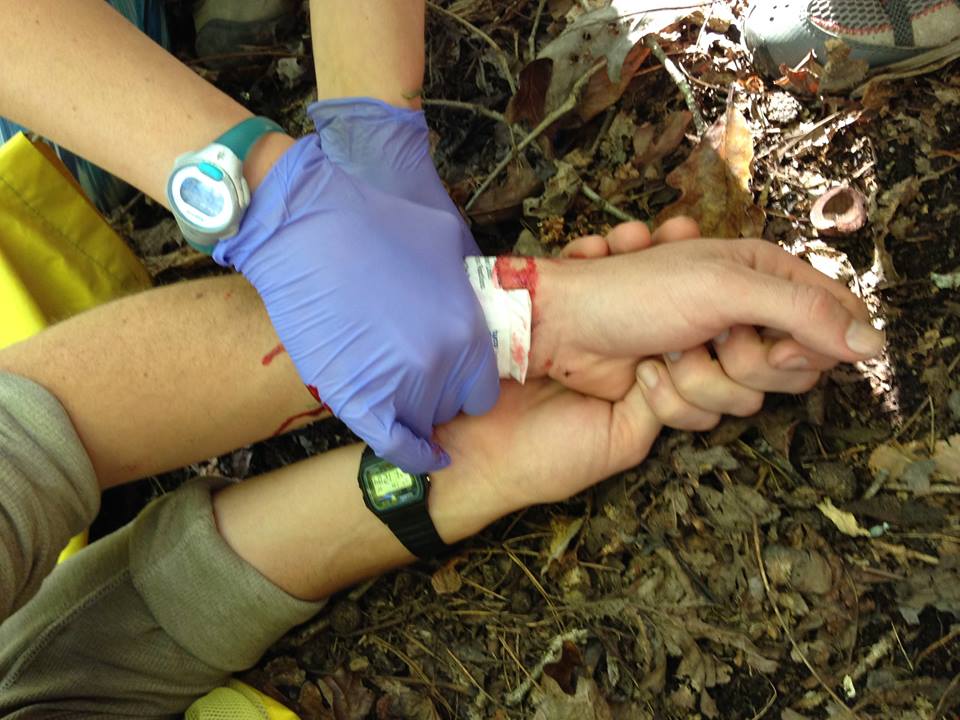
- Bleeding and Infection Management
- Long Term Wound Care
- Special Considerations
- Impaled Objects
- Blisters
- Eye Injuries
- Teeth
- Wilderness Burn Management
Environmental Emergencies
- Cold Illness (Hypothermia, Frostbite, Immersion Foot)
- Heat Illness (Dehydration, Heat Exhaustion, Heat Cramps, Heat Stroke)
- Exertional Hyponatremia
- Drowning and Near Drowning
- Altitude
- Lightning
- Anaphylaxis - Highlights of TX and Monitoring
- North American Bites and Stings
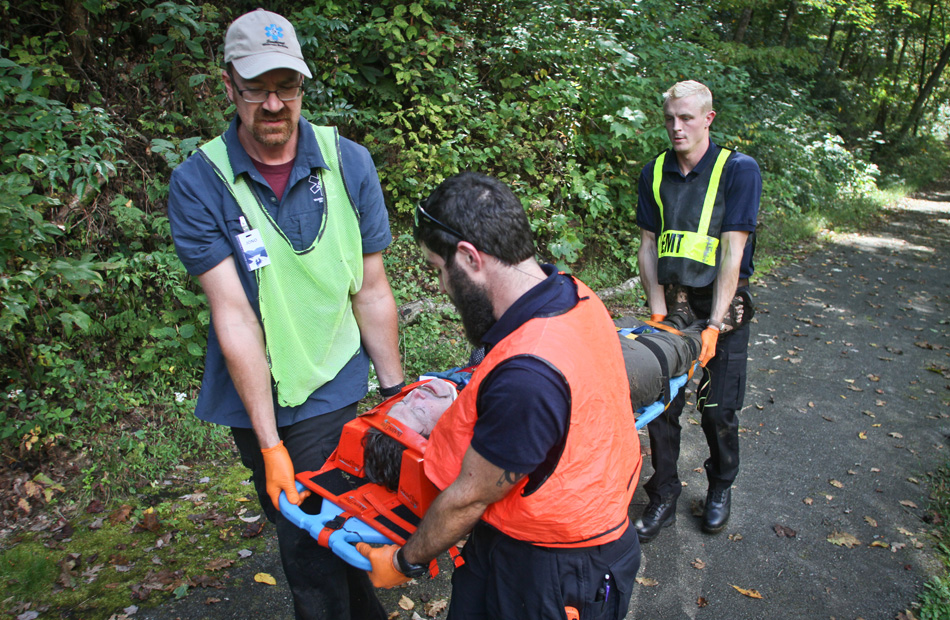
Backcountry Rescues
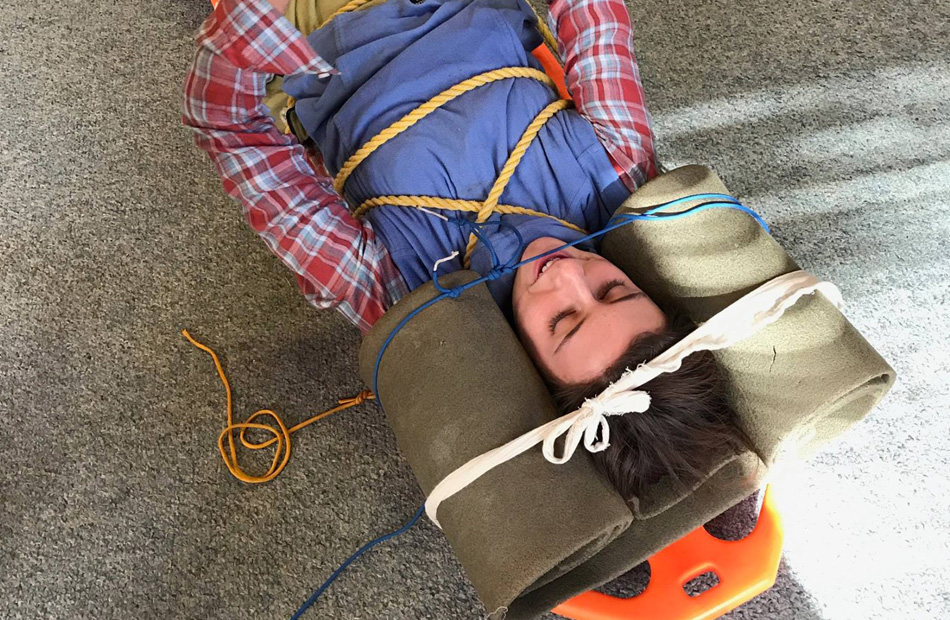
- Packaging Practice
- Incident Command System
- Long Term Patient Care Considerations
- Improvised Litters
- Litter Handling
Backcountry Survival Skills
- Water Disinfection
- Emergency Bivouac
- Shelter-Building
Group Management in the Backcountry
- International Travel and Safety
- Common Expedition Problems
- Expedition Medications and Medical Kits
- Death in the Backcountry
Clinical Rotations & Assessments
Course In Action Photos
Packing List
You should plan to have clothing appropriate to the season in which you will be taking the class, as you will spend a significant amount of time outside. The following list is to SUPPLEMENT the clothing you will be wearing. If you have trouble locating some of these items please call us as we have a limited amount for loan.
Recommended Gear List
EMT Intensive course:
• Textbook (provided by SOLO SE)
• Approved clothing for clinicals (see above)
• Waterproof Jacket
• Wristwatch with seconds displayed (cell phone is not sufficient)
• Pens and any other office supplies necessary for studying (notebooks, highlighters, sticky- notes, etc.)
• Clothing appropriate to the weather for hands-on scenarios
Wilderness EMT (as above and…):
• Backpack for carrying gear (medium to large)
• Rain gear (tops and bottoms)
• Layers of clothing (for splinting exercises and to keep yourself warm during scenarios)
• Warm hat or sun hat (depending on season)
• Water bottles (at least 1 quart/liter)
• Head lamp or flashlight
• Footwear appropriate to the terrain (closed toes, no flip flops)
• Insect repellent (seasonal)
• Sunscreen (seasonal)
• Clothing that could be worn on a rafting trip (seasonal)
Additional items (not required):
• Old sleeping bag or blanket
• Footwear you don't mind getting wet
• Knife
• Plastic tarp or groundsheet (min 6’x 6’)
• Sleeping pad (ensolite or thermarest)
• Personal first aid kit (Band-Aids etc.)
• Some of our scenarios may be water based; if you have your own wetsuit, PFD, water shoes, splash gear etc. please feel free to bring them, although we will supply all necessary gear free of charge